TL;DR
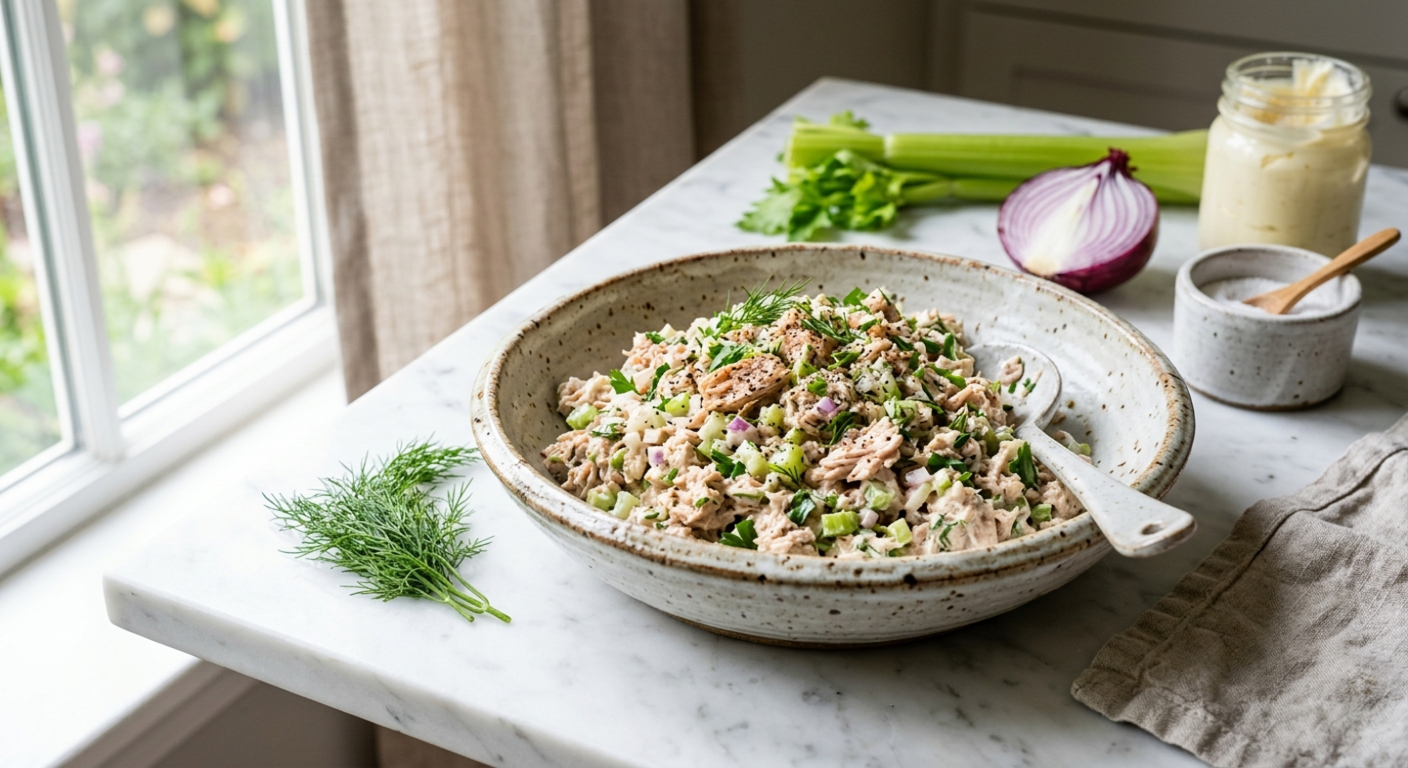
Tuna salad is a creamy, protein-packed dish made with canned tuna, mayonnaise, celery, and red onion. It comes together in under 10 minutes, works great as a sandwich filling or snack, and keeps in the fridge for up to 3–4 days. This recipe is simple, reliable, and endlessly customizable.
What Is Tuna Salad?
Tuna salad is a cold, mayonnaise-based dish made from canned or cooked tuna mixed with vegetables and seasonings.
It’s one of the most popular no-cook lunch options in the United States and for good reason.
It’s fast, affordable, filling, and requires almost no cooking skill. Most people already have the ingredients at home.
You can eat it as a sandwich filling, scoop it onto crackers, stuff it into lettuce cups, or eat it straight from the bowl. It’s that flexible.
Why You’ll Love This Tuna Salad Recipe
- Ready in 10 minutes no cooking, no stove, no oven
- High in protein one serving gives you 25–30g of protein
- Budget-friendly canned tuna is one of the cheapest protein sources available
- Great for meal prep make a big batch and use it all week
- Incredibly versatile eat it in a sandwich, on crackers, in a wrap, or with veggies
- Easily customizable swap mayo for Greek yogurt, add eggs, corn, pickles, or avocado
- Kid-friendly mild flavor that most picky eaters will enjoy
Ingredients
Here’s what you need for a classic tuna salad recipe with explanations for why each ingredient matters.
- 2 cans (5 oz each) tuna in water, well drained
The star of the dish. Canned tuna in water keeps it lighter than oil packed tuna. Drain thoroughly or the salad gets watery. Substitute: tuna in olive oil for a richer flavor. - 3 tablespoons mayonnaise
Binds everything together and gives that classic creamy texture. Start with 3 tablespoons and adjust to your preference. Substitute: Greek yogurt, avocado mayo, or a 50/50 mix of mayo and Greek yogurt. - 2 stalks celery, finely chopped
Adds a satisfying crunch and lightens up the texture. Without celery, tuna salad feels dense and one-note. Substitute: cucumber, fennel, or bell pepper. - 2 tablespoons red onion, finely minced
Brings sharpness and color. Red onion is milder than white onion when used raw. Substitute: green onion (scallion) for a gentler flavor. - 1 tablespoon Dijon mustard
Adds depth and a subtle tang that makes the flavor more interesting. It also helps emulsify the mayo. Substitute: yellow mustard or a dash of apple cider vinegar. - 1 tablespoon fresh lemon juice
Brightens everything and keeps the flavors tasting fresh. It also cuts through the richness of the mayo. Substitute: pickle juice works surprisingly well here. - Salt and black pepper to taste
Tuna needs a little salt to bring out its flavor. Start small canned tuna already has sodium. - Optional: 1 2 tablespoons sweet pickle relish
Many classic tuna salad fans swear by this. It adds a gentle sweetness and tang. Substitute: diced dill pickles for a less sweet version.

Best Tuna for Tuna Salad
Not all canned tuna is the same. Here’s a breakdown so you can choose the right one.
Chunk Light Tuna
Made from smaller skipjack tuna. It has a stronger, fishier flavor and a softer, shredded texture. It’s the most affordable option and works well in classic tuna salad.
Solid White Albacore
Larger, firmer pieces of white tuna. The flavor is milder and cleaner. It holds its texture better when mixed. If you want a premium-tasting tuna salad, go with albacore.
Tuna Packed in Water
Lower in calories and fat. Draining it well is critical — water-packed tuna releases more liquid during mixing, which can make your salad watery.
Tuna Packed in Olive Oil
Richer flavor and naturally moister texture. You may need slightly less mayonnaise. Best when you want a more Mediterranean-style result.
Our recommendation: For everyday tuna salad, chunk light tuna in water is the go-to. For a nicer texture and milder taste, solid white albacore in water is worth the small extra cost.

How to Make Tuna Salad (Step-by-Step)
- Drain the tuna completely.
Open both cans and press the lid firmly against the tuna to squeeze out as much liquid as possible. Then flip the can over a colander and let it drain for a full minute. Excess moisture is the #1 reason tuna salad gets watery. - Break up the tuna in a bowl.
Transfer the drained tuna to a medium mixing bowl. Use a fork to break it into small, even pieces. You want it flaky but not mushy some texture is good. - Add the vegetables.
Add the chopped celery and minced red onion. Make sure both are finely chopped large chunks throw off the texture and make it hard to spread. - Mix in the mayo and mustard.
Add mayonnaise, Dijon mustard, and lemon juice. Stir gently with a fork until everything is evenly coated. Don’t overmix you’re not making a paste. - Season and adjust.
Taste the mixture. Add salt, black pepper, and pickle relish if using. Adjust mayo if it looks dry. Adjust lemon juice if it needs brightness. - Chill before serving (optional but recommended).
Cover and refrigerate for at least 15 20 minutes. Cold tuna salad tastes noticeably better the flavors meld together and the texture firms up slightly.

Expert Tips for the Best Tuna Salad
- Soak the red onion in ice water for 5 minutes before adding it. This removes the harsh bite while keeping the flavor. Game changer for people who find raw onion too strong.
- Use a fork, not a spoon, to mix. A spoon compresses the tuna into a paste. A fork keeps it light and fluffy.
- Add mayo in stages. Start with 2 tablespoons, taste, then add more. It’s easy to add more mayo but impossible to take it out.
- Let it rest in the fridge. Even 15 minutes makes a huge difference. The flavors come together as it chills.
- Don’t skip the acid. Lemon juice or pickle juice lifts the whole dish. Without it, tuna salad can taste flat.
- Press tuna against a fine mesh strainer if you really want to eliminate moisture. The drier the tuna, the longer it keeps without going watery.
- Toast your bread if you’re making a tuna salad sandwich. Toasted bread won’t get soggy as quickly.
Common Mistakes to Avoid
- Not draining the tuna properly. This is the #1 mistake. Under-drained tuna releases water into the bowl, making the salad soupy within an hour. Drain, then drain again.
- Using too much mayo. More mayo doesn’t mean more flavor it just makes it heavy and rich. Start conservative. You can always add more.
- Overseasoning with salt. Canned tuna already contains sodium. Taste before adding salt, not after.
- Chopping vegetables too large. Big chunks of celery or onion create uneven bites. Finely mince everything so every forkful has a balanced flavor.
- Storing improperly. Tuna salad left at room temperature for more than 2 hours enters the food safety danger zone. Always refrigerate promptly in an airtight container.
- Skipping the resting time. Serving tuna salad immediately after mixing is fine, but it tastes noticeably better after 15 20 minutes in the fridge.

Tuna Salad Variations
Classic Tuna Salad Recipe
Stick to the core ingredients: tuna, mayo, celery, red onion, a little mustard, and lemon juice. Simple and timeless. This is the version most people grew up eating and the one that works best as a sandwich filling.
Creamy Tuna Salad Recipe
For an extra creamy tuna salad, increase the mayo to 4–5 tablespoons and add a tablespoon of sour cream. You can also fold in a small amount of cream cheese for richness. Best served on thick toast or as a dip with crackers.
Tuna Salad Recipe with Egg
Hard-boiled eggs are a classic addition. Chop 2 hard boiled eggs and fold them in after mixing the base. The eggs add creaminess, more protein, and bulk to the dish. This variation is particularly popular in the South.
Tuna Salad Recipe with Corn
Add ½ cup of drained canned corn (or thawed frozen corn) to the base recipe. The corn adds a mild sweetness and pop of texture that works especially well when served in lettuce cups or with tortilla chips. A squeeze of lime juice complements this version nicely.
Healthy Tuna Salad Without Mayo
Swap mayo entirely for plain Greek yogurt or mashed avocado. Greek yogurt gives a tangy, creamy result with extra protein and fewer calories. Mashed avocado gives a buttery, mild flavor. Both work beautifully. Add extra lemon juice to brighten.
High-Protein Tuna Salad
Use two cans of tuna instead of one. Add two hard-boiled eggs, a tablespoon of hemp seeds, and replace mayo with Greek yogurt. This version can hit 40+ grams of protein per serving perfect for post-workout lunches or high-protein meal prep.
Is Tuna Salad Healthy?
Yes tuna salad is generally a very healthy lunch option, especially when made with mindful ingredient choices.
Protein: Tuna is one of the best lean protein sources available. A standard serving of tuna salad delivers around 25 30g of protein, which helps with satiety and muscle maintenance.
Omega-3 fatty acids: Tuna, especially albacore, is rich in EPA and DHA omega-3 fats. These support heart health, brain function, and reduce inflammation.
Calories: A basic tuna salad serving runs around 200 250 calories, depending on how much mayo is used. Using Greek yogurt instead of mayo can drop this to around 150 calories per serving.
Weight loss: Tuna salad is highly filling for its calorie count. The protein keeps you full for hours. Served in lettuce cups or with raw vegetables instead of bread, it makes an excellent low-carb, weight-friendly meal.
Mercury note: The FDA recommends limiting albacore tuna to 6 oz per week for most adults due to mercury content. Chunk light tuna (skipjack) is lower in mercury and considered safe to eat more frequently.
Nutrition Table (Per Serving Classic Recipe)
| Nutrient | Amount (approx.) |
|---|---|
| Calories | 220 kcal |
| Protein | 26g |
| Fat | 10g |
| Saturated Fat | 1.5g |
| Carbohydrates | 3g |
| Fiber | 0.5g |
| Sodium | 380mg |
| Omega-3s | ~500mg |
*Values are approximate and vary based on brands and quantities used. Want to calculate the exact nutrition of your homemade salad? Try our
How Long Does Tuna Salad Last?
Tuna salad lasts 3 to 4 days in the refrigerator when stored in an airtight container.
For the best results, keep it in the coldest part of the fridge (not the door). Stir before serving — ingredients settle during storage.
Meal prep tip: Make a double batch on Sunday and use it for weekday lunches Monday through Thursday. Keep it simple and store in a sealed glass container.
Food safety reminder: Never leave tuna salad at room temperature for more than 2 hours. In hot weather (above 90°F), that window drops to 1 hour.
Can You Freeze Tuna Salad?
No you should not freeze tuna salad made with mayonnaise.
When mayo freezes and then thaws, it separates and becomes grainy and watery. The celery and onion also lose all their crunch after freezing. The resulting texture is unpleasant.
If you want to prep tuna ahead for freezing, freeze the plain drained tuna without any other ingredients. Thaw it in the fridge overnight, drain again, and then mix fresh with mayo and vegetables.
What to Serve with Tuna Salad
| Serving Idea | Why It Works |
|---|---|
| Classic sandwich on toasted bread | The most popular way sourdough, whole wheat, or white bread all work |
| Croissant sandwich | Buttery and flaky great for brunch or a fancy lunch |
| Lettuce cups (butter lettuce) | Low-carb option that adds fresh crunch |
| Flour or corn tortilla wrap | Easy to take on the go, great with sliced avocado |
| Crackers (Ritz, Triscuits, etc.) | Quick snack option, no prep needed |
| Stuffed tomato or avocado | Impressive presentation, great for light lunches |
| On top of a green salad | Adds protein to a leafy base pairs well with our Best Broccoli Salad Recipe |
| With sliced cucumbers or bell peppers | Crunchy, low-calorie vehicle for dipping |
| Stuffed into pita bread | Great for packed lunches doesn’t get soggy as fast as regular bread |
| On rice cakes | Gluten free option with very few calories |

Frequently Asked Questions
Can I make tuna salad ahead of time?
Yes. Tuna salad is an ideal make-ahead recipe. Mix it up to 24 hours in advance and store it covered in the fridge. The flavors actually improve as they sit. Just give it a quick stir before serving.
Why does tuna salad get watery?
The main cause is under-drained tuna. Water packed tuna releases moisture as it sits. Always press and drain the tuna thoroughly before mixing. Another cause is salt drawing moisture out of the vegetables so season just before serving if you’re planning to store it.
What is the best tuna for tuna salad?
For everyday use, chunk light tuna in water is the most affordable and widely available. For better texture and milder flavor, solid white albacore in water is the upgrade. Both work well it comes down to personal preference and budget.
Can I use Greek yogurt instead of mayo?
Absolutely. Plain Greek yogurt is one of the best mayo substitutes in tuna salad. It’s tangy, creamy, and adds extra protein. Use the same amount as mayo and add a small drizzle of olive oil to round out the flavor.
Is tuna salad good for weight loss?
Yes, especially when made with Greek yogurt instead of mayo and served in lettuce cups or with vegetables instead of bread. The high protein content keeps you full, and a serving is low in carbs and moderate in calories.
Can I freeze tuna salad?
No. Mayo-based tuna salad does not freeze well. The mayo separates and the vegetables lose all texture when frozen and thawed. Freeze plain cooked or canned tuna only, then make the salad fresh.
How long does tuna salad last in the fridge?
Tuna salad keeps well for 3 to 4 days in an airtight container in the refrigerator. Always use clean utensils when scooping to avoid contamination, and keep it well sealed.
What can I add to tuna salad for more flavor?
Some great additions include: diced dill pickles, capers, fresh dill, hot sauce, smoked paprika, garlic powder, Worcestershire sauce, or a drizzle of sriracha. Even a small spoonful of relish can completely change the flavor profile.
Can I use canned corn in tuna salad?
Yes, and it’s a popular variation. Drained canned corn adds sweetness and texture that balances the savory tuna. Use about ½ cup per 2 cans of tuna. It pairs especially well when you add lime juice and cilantro for a light, summery twist.
Do eggs belong in tuna salad?
That’s a personal preference, but many people love them. Chopped hard-boiled eggs add protein, creaminess, and a slightly richer flavor. If you’ve never tried it, start by adding one egg to your next batch and see how you feel about the texture.
Real Talk: What People Ask Online About Tuna Salad
Across Reddit and Quora, a few questions come up again and again. Here are honest, practical answers.
How do I make tuna salad taste better?
The single biggest upgrade is acid lemon juice or pickle juice. Most bland tuna salads are missing brightness. Also try Dijon mustard (not yellow) and a pinch of smoked paprika. These two additions alone will make a noticeable difference.
How do I reduce the fishy flavor?
Choose chunk light tuna it’s actually milder than albacore despite the stronger reputation. Also: rinse the drained tuna briefly under cold water, add lemon juice, and don’t skip the celery. The crunch and freshness of celery mask fishiness naturally.
What are the best meal prep tips for tuna salad?
Make a double or triple batch on Sunday. Store in glass containers. Keep bread and vegetables separate assemble sandwiches fresh each day. Pre-portioning into small containers also saves time and makes it easy to grab and go.
Can I make tuna salad on a budget?
Yes and it’s already one of the most budget friendly high protein lunches around. Use store brand chunk light tuna (often under $1 a can), keep the add ins simple (celery, onion, basic mayo), and skip any premium ingredients. A full batch for 4 servings costs under $5 total.
Is tuna salad a good high-protein lunch?
One of the best. A standard serving of tuna salad made with 2 cans of tuna easily hits 25 30g of protein. Add a hard-boiled egg and swap mayo for Greek yogurt, and you’re looking at 35 40g of protein per serving. Filling, fast, and affordable.
If you love easy, protein rich salads, you’ll want to check out our Best Broccoli Salad Recipe next. It’s another crowd-pleaser that’s great for meal prep and tastes even better the next day.
Conclusion
A great tuna salad recipe doesn’t need to be complicated. The classic version canned tuna, mayo, celery, onion, mustard, and lemon juice works beautifully every single time.
The key is in the details: drain your tuna properly, use quality ingredients, season carefully, and let it rest in the fridge before serving.
Whether you’re making it for a quick lunch, a meal prep session, or a party platter, this tuna salad recipe is one you’ll come back to again and again.
Give it a try and let us know how it turned out in the comments below. Did you add eggs? Corn? A spoonful of hot sauce? We’d love to hear your favorite twist.
And if you want to track the exact calories in your version, head over to our
just plug in what you used and get an instant nutrition breakdown.