TL;DR
What is the Loaded Dense Bean Salad Recipe?
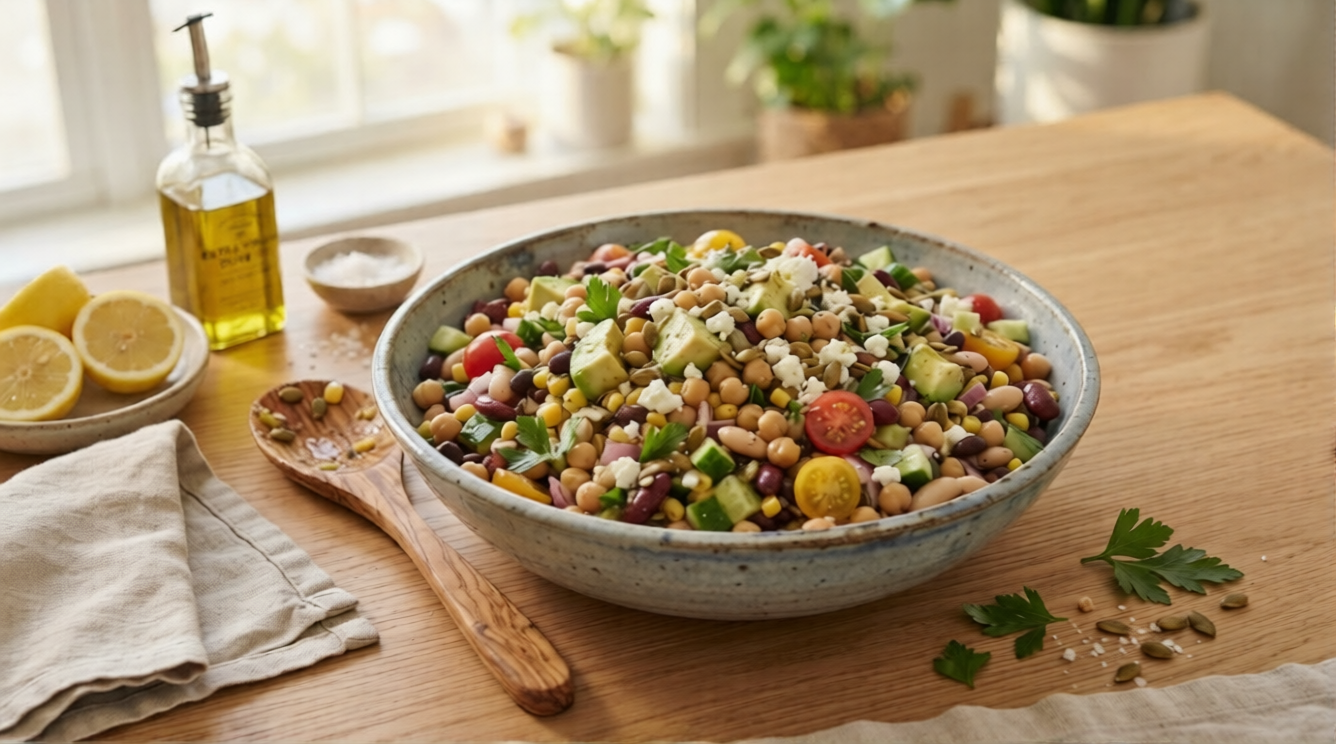
The Loaded Dense Bean Salad Recipe is a hearty, no cook salad made with three types of beans, crisp fresh vegetables, and a bold olive oil dressing. It’s high in plant protein and fiber, ready in under 15 minutes, and stays fresh in the fridge for up to 4 days ideal for meal prep.
It’s 6:40 on a Tuesday night, the fridge has three sad tomatoes in it, and you have exactly zero energy to cook a “real” dinner.
This is the exact moment the Loaded Dense Bean Salad Recipe was built for.
No stove. No oven. Just a chopping board, a few cans of beans, and ten minutes of your life.
What comes out the other side is loud, colorful, packed with plant protein, and somehow tastes like you tried way harder than you actually did.
This is the salad meal preppers swear by, the one high-protein eaters keep on repeat, and the one that quietly became one of the most searched recipes on the internet for a reason: it actually works.
No wilting lettuce by day three. No sad, watery bowl staring back at you from the fridge.
Just beans, crunch, and a dressing sharp enough to make the whole thing taste intentional rather than thrown together.
Why You’ll Love This Recipe
- High protein: Three beans deliver plant protein in every forkful.
- Meal prep friendly: Tastes better on day two.
- Budget-friendly: Built from pantry staples and canned beans.
- Colorful: Red, yellow, green, and cream in one bowl.
- Customizable: Swap beans, herbs, or dressing endlessly.
- Quick: Ready in under 15 minutes, no cooking required.
- Naturally gluten free.
- Easy vegan option with a simple swap.
Tip: Make a double batch on Sunday. This salad is one of the few that genuinely tastes better after a day in the fridge.
Ingredients
Every ingredient here earns its place. Nothing is filler.
| Ingredient | Amount | Purpose | Substitution |
|---|---|---|---|
| Chickpeas (canned) | 1 can (15 oz) | Base protein, creamy bite | White beans |
| Black beans (canned) | 1 can (15 oz) | Earthy flavor, color contrast | Kidney beans |
| Cannellini beans (canned) | 1 can (15 oz) | Buttery texture | Navy beans |
| Cherry tomatoes | 1 cup, halved | Fresh acidity, color | Diced regular tomato |
| Red bell pepper | 1, diced | Crunch and sweetness | Yellow bell pepper |
| Red onion | 1/2, finely diced | Sharp bite, balances beans | Shallot |
| English cucumber | 1, diced | Crunch and freshness | Persian cucumber |
| Fresh parsley | 1/2 cup, chopped | Herbal brightness | Cilantro |
| Feta cheese | 1/2 cup, crumbled | Salty richness | Vegan feta or omit |
| Extra virgin olive oil | 1/4 cup | Dressing base | Avocado oil |
| Red wine vinegar | 2 tbsp | Acidity to cut density | Lemon juice |
| Dijon mustard | 1 tsp | Emulsifies dressing | Whole grain mustard |
| Garlic | 1 clove, minced | Depth of flavor | Garlic powder |
| Salt and black pepper | To taste | Flavor balance | — |

Kitchen Tools You’ll Need
- Large mixing bowl
- Fine-mesh strainer (for rinsing beans)
- Sharp chef’s knife
- Cutting board
- Small jar or whisk for the dressing
- Airtight containers for storage
How to Make Loaded Dense Bean Salad
- Rinse the beans. Drain all three cans and rinse under cold water until the water runs clear. Look for: no foam or cloudiness left. Mistake to avoid: skipping this step leaves a tinny, salty aftertaste. Pro tip: shake the strainer to drain excess water so the dressing doesn’t get watered down.
- Chop the vegetables. Dice the bell pepper, cucumber, red onion, and halve the cherry tomatoes into uniform, small pieces. Look for: pieces roughly bean-sized so every bite is balanced. Mistake to avoid: cutting vegetables too large makes the salad hard to eat and unevenly flavored.
- Make the dressing. Whisk olive oil, red wine vinegar, Dijon mustard, garlic, salt, and pepper together in a small jar until emulsified. Look for: a slightly thickened, glossy dressing. Pro tip: shake it in a sealed jar for 15 seconds instead of whisking it emulsifies faster.
- Combine everything. Add the beans and vegetables to a large bowl. Pour the dressing over the top. Mistake to avoid: dressing the salad right before serving without letting it rest loses flavor depth.
- Toss gently. Fold everything together so the beans don’t turn mushy. Look for: beans staying whole, not smashed. Pro tip: use a spatula in a folding motion rather than stirring aggressively.
- Rest before serving. Let the salad sit for at least 20 minutes at room temperature, or chill for 1 hour. Why: this is when the flavors actually merge don’t skip it.
- Add feta and herbs last. Fold in parsley and feta right before serving to keep textures fresh. Mistake to avoid: adding feta too early makes it dissolve into the dressing.

Best Dressing for Dense Bean Salad
The dressing has one job: cut through the density of the beans with acid and brightness.
Olive oil brings richness. Red wine vinegar brings sharp acidity. Dijon mustard is the bridge it emulsifies the oil and vinegar into one silky texture instead of a separated puddle.
Garlic adds a savory backbone that keeps the dressing from tasting one-note.
Dressing Variations
- Greek-style: swap red wine vinegar for lemon juice, add dried oregano.
- Mexican-style: use lime juice, cumin, and a pinch of chili powder.
- Creamy version: whisk in 1 tbsp Greek yogurt for a lighter, tangier dressing.
- Spicy version: add a teaspoon of hot sauce or chili flakes.

Expert Recipe Tips
- Always rinse canned beans thoroughly it changes the entire flavor profile.
- Dice vegetables to roughly the size of a chickpea for balanced bites.
- Let the salad rest at least 20 minutes before serving.
- Add avocado only right before eating, never during meal prep.
- Use a mix of bean textures creamy, firm, and buttery for contrast.
- Salt the salad in two stages: once before resting, once before serving.
- Use fresh herbs, not dried, for the brightest flavor.
- Shake the dressing in a jar instead of whisking for faster emulsification.
- Cut onions extra fine no one wants a raw onion bite.
- Store dressing separately if prepping more than 2 days ahead.
- Use a wide, shallow bowl for tossing so nothing gets crushed.
- Add crunchy elements like bell pepper last if reheating leftovers isn’t planned.
- Taste before serving canned beans vary in saltiness by brand.
- Double the dressing recipe if you like a juicier salad.
- Let the salad come to room temperature before serving for the best flavor.

Common Mistakes to Avoid
- Not rinsing beans: Leaves a salty, tinny taste. Fix: always rinse under cold running water for at least 20 seconds.
- Dressing too early: Vegetables go soggy and lose crunch. Fix: dress no more than a few hours ahead of serving.
- Cutting vegetables unevenly: Creates inconsistent bites where some are all crunch and others are all bean. Fix: dice everything small and uniform.
- Skipping the rest time: Flavors stay flat and disconnected. Fix: always let the salad sit at least 20 minutes before serving.
- Adding avocado too early: It browns and turns mushy within an hour. Fix: add it just before serving, never during prep.
- Overdressing: Drowns the beans and makes the salad heavy instead of bright. Fix: start light and add more dressing to taste.
- Using only one type of bean: Loses the textural contrast that makes this salad interesting. Fix: stick to a mix of three.
- Not draining beans well: Waters down the dressing and dilutes flavor. Fix: shake off excess liquid before adding beans to the bowl.
- Adding feta too soon: It dissolves into the dressing and loses its texture. Fix: fold it in right before serving.
- Skipping the acid: Makes the salad taste heavy and one-note. Fix: vinegar or citrus juice is non-negotiable.
- Storing in a shallow container: Dries out faster due to more air exposure. Fix: use a deep, airtight container instead.
- Under-seasoning: Beans need more salt than most people expect since they’re naturally mild. Fix: taste and adjust seasoning as you go, not just once at the end.
Everything Most Recipes Forget to Mention
Most bean salad recipes stop at the ingredient list. Here’s what actually matters once you’re standing in your kitchen.
Best Beans for Texture
Not all beans behave the same way once mixed with a dressing.
Cannellini and chickpeas hold their shape best under pressure, which is why they anchor this recipe.
Black beans are a touch softer, adding contrast rather than structure.
Avoid pinto beans in bulk here they tend to break down faster than the other three once tossed.

How to Prevent a Soggy Salad
Soggy bean salad almost always comes down to two things: wet beans and early dressing.
Drain and shake your beans thoroughly before adding them to the bowl.
If prepping more than a day ahead, keep tomatoes and cucumber in a separate container until you’re ready to combine and serve.
How to Transport It for Lunch
This salad travels better than almost any leafy green salad, which is exactly why it’s a meal-prep favorite.
Pack it in a wide, shallow container rather than a deep narrow one so it doesn’t compress and turn mushy.
Keep any avocado or feta in a small separate container and add it right before eating.
Best Herbs to Use
Parsley is the most versatile choice, offering brightness without overpowering the beans.
Cilantro works beautifully in the Mexican variation, while dill and mint shine in the Mediterranean and Greek versions.
Whatever herb you choose, always add it fresh and near the end dried herbs added early can taste dusty against cold beans.
Best Cheeses to Use
Feta is the classic choice for good reason: salty, tangy, and it holds its crumble in a cold salad.
Cotija works well for Mexican-style versions, while a light shaving of parmesan adds a different kind of umami depth if you want to experiment.

Health Benefits
Beans are one of the most nutrient-dense, budget-friendly foods available, and this salad leans on that.
They’re rich in fiber, which supports digestion and helps you feel full longer a big reason this salad works so well for weight-conscious eaters.
Beans also provide plant-based protein, making this a solid option for vegetarians and anyone trying to eat less meat without losing satiety.
Olive oil contributes heart-healthy monounsaturated fats, which organizations like the American Heart Association associate with supporting healthy cholesterol levels as part of a balanced diet.
The fiber and protein combination also helps moderate blood sugar response compared to refined-carb-heavy meals.
Fresh vegetables round things out with vitamins, minerals, and gut-friendly fiber that support overall digestive health.
The combination of soluble and insoluble fiber found in beans feeds beneficial gut bacteria, which plays a growing role in overall digestive wellness.

Nutrition Facts
Approximate values per serving (based on 6 servings):
| Nutrient | Amount |
|---|---|
| Calories | ~260 kcal |
| Protein | ~12 g |
| Carbohydrates | ~28 g |
| Fat | ~11 g |
| Fiber | ~9 g |
Values are estimates and will vary based on specific brands and substitutions used.
Serving Suggestions
- Lunch: Eat it straight from the container at room temperature, no reheating needed.
- Dinner: Pair with grilled chicken, fish, or steak for a complete, balanced meal.
- BBQ: Serve alongside grilled corn and burgers as a lighter side that still feels substantial.
- Picnic: Travels well in a cooler bag since it doesn’t wilt like leafy green salads.
- Potluck: Doubles easily, holds up at room temperature for hours, and rarely needs reheating or special handling.
- Meal prep: Portion into individual containers on Sunday for five days of grab-and-go lunches.
- Wrap filling: Stuff into a warm tortilla with extra greens for a quick handheld lunch.
- On toast: Spoon over avocado toast for an easy protein-packed breakfast or brunch.
- Alongside grilled chicken: A classic gym goer’s combo that balances lean protein with fiber.
- With soup: Pair with a light broth-based soup, like a simple vegetable or chicken soup, for a cozy, balanced meal.

Storage and Meal Prep
Store the salad in an airtight container in the refrigerator for up to 4 days.
Freezing is not recommended beans and fresh vegetables become mushy once thawed.
Use a deep, airtight container rather than a shallow one to reduce air exposure and keep vegetables crisper for longer.
Add avocado only right before eating, since it browns and softens quickly once cut.
To keep vegetables crunchy through the week, store the dressing separately and toss individual portions just before eating.
Warning: If prepping more than 3 days ahead, keep tomatoes and cucumber separate until serving they release water and can make the salad watery over time.

Frequently Asked Questions
Can I make it three days ahead?
Yes. This salad actually improves after a day or two in the fridge as the flavors meld. Just add avocado, feta, and any crunchy garnishes right before serving.
Does avocado turn brown in this salad?
Yes, if added too early. Avocado oxidizes quickly once cut, so always fold it in right before you plan to eat, not during initial prep.
Can frozen corn be used?
Absolutely. Thaw it first and pat it dry, or quickly char it in a dry skillet for extra flavor and texture before adding.
Can I use only canned beans?
Yes, canned beans are the easiest option and work great here. Just make sure to rinse them thoroughly to remove excess sodium and starch.
Can I skip cilantro?
Of course. Parsley, basil, or even fresh dill work well as substitutes if cilantro isn’t your thing.
Which beans hold texture best?
Cannellini and chickpeas hold their shape well. Black beans are slightly softer, which is why the mix of three creates the best texture contrast.
Can I freeze bean salad?
It’s not recommended. Freezing breaks down the texture of both the beans and fresh vegetables, leaving a mushy result once thawed.
How can I increase protein naturally?
Add grilled chicken, a boiled egg, extra chickpeas, or a scoop of quinoa. All of these boost protein without changing the core flavor.
Are dried beans better than canned?
Dried beans give slightly firmer texture and no added sodium, but require soaking and cooking time. Canned beans are the faster, nearly-as-good option for weekday meals.
How long should the salad chill before serving?
At least 20 minutes at room temperature, or up to an hour in the fridge, gives the dressing time to soak into the beans and vegetables.
Is dense bean salad good for weight loss?
It can fit well into a weight-conscious eating plan thanks to its high fiber and protein content, both of which support fullness. As with any food, portion size and overall daily intake still matter most.
Can I add pasta to make it heartier?
Yes, adding a cup of cooked and cooled small pasta like orzo or ditalini turns this into a pasta-bean hybrid salad. Just increase the dressing slightly since pasta absorbs more liquid than beans alone.
What’s the best way to season canned beans that taste bland?
Rinse them well first, then season in layers a pinch of salt while dressing, and a final taste-and-adjust right before serving. Acid from the dressing also wakes up bland beans significantly.
Ready to plan your whole week around meals like this?
Try the
on LeafyAddict to build a full week of healthy meals in minutes.
Final Thoughts
This dense bean salad is proof that healthy food doesn’t need to be complicated to be genuinely good.
Three cans of beans, a handful of vegetables, and a simple dressing turn into something you’ll actually crave, not just tolerate.
Make a batch this week, try one of the variations, and see which one becomes your go-to.
If you give this recipe a try, drop a comment below and let us know which variation you loved most.
Looking for more? Check out our Ultimate Quinoa Salad Recipe for another high-protein, meal-prep-friendly option.