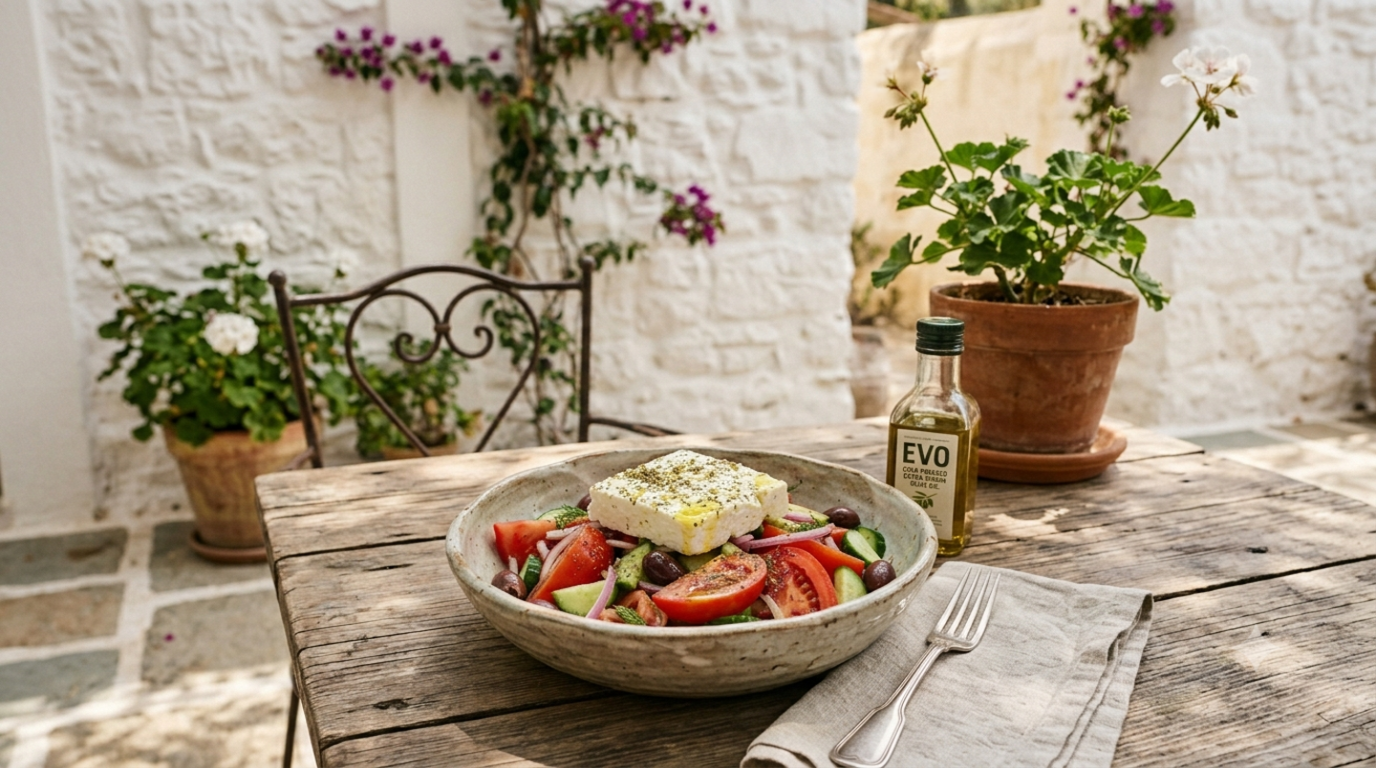
TL;DR; What is a Greek Salad Recipe? This Greek salad recipe is one of the most beloved Mediterranean dishes in the world and for good reason.No lettuce, no cooking just fresh vegetables tossed with a light olive oil dressing. Ready in 15 minutes.
What Is Greek Salad?
Greek salad is a traditional Mediterranean salad made with chunky cut tomatoes, cucumber, red onion, Kalamata olives, and a thick slab (or crumbles) of feta cheese, dressed simply with extra virgin olive oil and dried oregano.
In Greece, it’s called Horiatiki which literally translates to “village salad.” The word horió means village, which tells you everything about its roots. This was peasant food, made with whatever was growing in the garden, dressed with the olive oil that filled every kitchen cupboard.
The original Horiatiki contains no lettuce. That’s the biggest difference between an authentic Greek salad and the Americanized version you’ll find at many restaurants. Traditional Greek salad is chunky, bold, and uncluttered.
American-style Greek salad often adds romaine lettuce, banana peppers, and a more acidic store-bought dressing. Both have their place but if you want the real thing, skip the lettuce and keep it simple.
Why You’ll Love This Greek Salad Recipe
This classic Greek salad recipe is one of the easiest, most satisfying salads you can put together and it works any time of year.
- No cooking, ever. Knife, cutting board, bowl. Done.
- Ready in 15 minutes. This is a genuine weeknight lifesaver.
- Packed with nutrients. Healthy fats from olive oil, protein and calcium from feta, antioxidants from vegetables.
- Endlessly flexible. Works as a side dish, a light lunch, or a full meal with protein added.
- Perfect for summer. No oven, no heat, all freshness.
- Great for meal prep. Prep the vegetables ahead; dress right before eating.

Greek Salad Ingredients
A traditional Greek salad recipe uses a short list of high-quality ingredients. Here’s what you need and why each one matters:
| Ingredient | Purpose | Best Option / Substitution |
|---|---|---|
| Tomatoes | The juicy, sweet backbone of the salad | Ripe Roma or vine tomatoes. Cherry tomatoes work great in winter when big tomatoes lack flavor. |
| Cucumber | Adds cool crunch and freshness | English or Persian cucumbers have thinner skin and fewer seeds. Regular cucumbers work just peel if the skin is tough. |
| Red onion | Sharpness and color contrast | Use thinly sliced red onion. Soak in cold water for 10 minutes to mellow the bite if you prefer. |
| Kalamata olives | Brininess and that signature Greek flavor | Whole Kalamata olives with pits are more flavorful. Pitted work fine for ease. Black olives are a mild substitute but lack depth. |
| Feta cheese | Creamy, salty, tangy richness | Block feta packed in brine. See the dedicated section below. |
| Extra virgin olive oil | The base of the dressing | Use the best quality you can. Greek olive oil is ideal it has a peppery, grassy finish. |
| Dried oregano | Earthy, herby backbone of the flavor | Greek dried oregano is more aromatic than generic supermarket varieties. Don’t skip this. |
| Red wine vinegar (optional) | Adds acidity and brightness | Authentic Greek salad often skips this olive oil alone dresses the salad. Add a small splash if you want more zing. |
Optional additions used in some regions of Greece: green bell pepper (sliced into rings), capers, and a small amount of dried thyme alongside oregano.
Best Feta Cheese for Greek Salad
The feta cheese you choose makes or breaks a Greek salad it’s not a background player, it’s one of the three or four central flavors of the dish.
Block Feta vs. Crumbled Feta
Always buy block feta packed in brine. Pre-crumbled feta is drier, less flavorful, and doesn’t have that creamy texture that makes Greek salad so satisfying. Block feta stays moist because it’s sitting in its own salty whey. You can crumble it yourself, or better yet lay a thick slab right on top of the salad the traditional Greek way.
Sheep’s Milk Feta vs. Cow’s Milk Feta
Authentic Greek feta is made from sheep’s milk, or a blend of sheep and goat milk. It has a richer, tangier, slightly gamey flavor that’s unmistakably feta. Cow’s milk feta (common in supermarkets) is milder and creamier it works well but lacks the sharpness of the real thing.
For the most authentic flavor, look for feta labeled PDO (Protected Designation of Origin) this legally must come from specific regions of Greece and must be made with sheep and goat milk. Dodoni, Epiros, and Mt. Vikos are reliable brands available in most US stores.
💡 Shopping Tip: Check the cheese section near specialty European imports, not just the standard shredded cheese aisle. Greek and Middle Eastern grocery stores almost always carry better block feta options at lower prices.

How to Make Greek Salad
Making an authentic Greek salad recipe is straightforward but a few small techniques make a real difference in the final result.
Classic Greek Salad Recipe
Prep time15 minutesCook timeNoneServes4DifficultyEasy
Ingredients
- 3 medium ripe tomatoes, cut into thick wedges
- 1 large English cucumber, sliced into half-moons (½ inch thick)
- ½ medium red onion, thinly sliced
- ½ cup Kalamata olives (whole or pitted)
- 6 oz block feta cheese, sliced or crumbled
- 3 tbsp extra virgin olive oil
- 1 tsp dried Greek oregano
- 1 tsp red wine vinegar (optional)
- Salt and black pepper, to taste
- ½ green bell pepper, sliced into rings (optional)
Instructions
- Prep the vegetables. Cut tomatoes into large wedges don’t dice them small. Slice cucumber into chunky half moons about ½ inch thick. Thinly slice the red onion.
- Combine in a large bowl. Add tomatoes, cucumber, red onion, and olives. If using bell pepper, add it now. Toss gently you don’t want to bruise the tomatoes.
- Season first. Add a pinch of salt and black pepper. Toss lightly. This draws out a little juice from the tomatoes and seasons the vegetables before the oil goes on.
- Dress the salad. Drizzle with olive oil and red wine vinegar if using. Toss gently to coat everything.
- Add the feta. Lay a thick slab of feta on top of the salad don’t stir it in. This is the authentic Greek presentation. Sprinkle generously with dried oregano.
- Serve immediately. Greek salad is best eaten fresh. If you need to prep ahead, see the storage section below for the right method.

My Greek Salad Dressing
The best Greek salad dressing is the simplest one extra virgin olive oil, a touch of red wine vinegar, oregano, salt, and pepper. That’s genuinely it.
There’s no need for emulsifiers, garlic powder, or a long list of spices. The vegetables and feta bring so much flavor on their own that the dressing’s job is just to bring them together, not compete with them.
Simple Greek Salad Dressing
- 3 tbsp extra virgin olive oil
- 1 tbsp red wine vinegar
- ½ tsp dried oregano
- ¼ tsp salt
- ⅛ tsp black pepper
- Optional: ½ tsp Dijon mustard (helps emulsify)
- Optional: 1 small garlic clove, minced
How to make it: Whisk all ingredients together in a small bowl, or shake in a sealed jar. Drizzle over salad right before serving. Makes enough for 4 servings.
Olive oil selection matters. Use the best extra virgin olive oil you can reasonably afford. A cold-pressed Greek olive oil with a peppery finish adds a dimension to this dressing that generic vegetable blends simply can’t replicate.
Balancing acidity: If the dressing tastes flat, add a few more drops of red wine vinegar. If it’s too sharp, add a little more olive oil. The ratio to aim for is roughly 3:1 oil to vinegar.

Tips for the Best Greek Salad
These tips separate a good Greek salad from a great one:
- Use room temperature tomatoes. Cold tomatoes from the fridge lose flavor. Let them sit out for 20–30 minutes before using.
- Cut everything chunky. Authentic Horiatiki uses large, rustic cuts not a fine dice. Big pieces mean better texture and more distinct flavors in each bite.
- Don’t overdress it. Greek salad should be lightly coated, not swimming in dressing. Start with less oil than you think you need; add more if needed.
- Season before dressing. Adding salt directly to the vegetables before the oil goes on allows it to penetrate and actually season the salad rather than sitting on the surface.
- Use quality olives. Kalamata olives in brine (not oil) are the most authentic. Taste one before adding if they’re overly salty, rinse briefly.
- Top, don’t stir, the feta. Lay the feta on top. Stirring it in turns the whole salad pink and breaks the cheese into dusty bits.
- Serve fresh. Greek salad starts releasing liquid within 20 30 minutes of being dressed. Make it just before eating when possible.
Why Does Greek Salad Get Watery?
A watery Greek salad is almost always caused by tomatoes releasing liquid after salt is added and this problem gets worse if the salad sits for more than 30 minutes.
Here’s what’s happening: tomatoes are mostly water. Salt draws that water out through osmosis. Once you add dressing, the process speeds up. Within an hour, the bowl fills with a diluted pink liquid that washes away the olive oil flavor and turns the vegetables soggy.
Common Causes
- Salting the salad too early and letting it sit
- Using overripe or very watery tomatoes
- Storing dressed salad in the fridge overnight
- Cutting tomatoes too small (more surface area = more liquid release)
- Using seedy cucumbers without removing the seeds
How to Prevent It
- Dress right before serving not an hour ahead.
- Use Roma or plum tomatoes they’re meatier and less watery than beefsteak varieties.
- Salt tomatoes separately and drain. If you’re prepping ahead, salt the tomatoes in a colander for 10 minutes to drain excess liquid, then pat dry.
- Remove cucumber seeds. Slice cucumber in half lengthwise and scoop out seeds with a spoon for a crunchier, less watery result.
- Store undressed. Keep the cut vegetables and dressing separate; combine only when ready to eat.
💡 Quick Fix: If your salad already has pooled liquid at the bottom, drain it off with a spoon and add a fresh drizzle of olive oil before serving. It won’t be perfect, but it recovers most of the flavor.
Variations and Add-Ins
The classic recipe is hard to beat, but these variations make the healthy Greek salad work for different diets and occasions.
🫘 Greek Salad with Chickpeas
Add one 15 oz can of drained, rinsed chickpeas for a plant-based protein boost. This turns the salad into a full vegetarian meal. Works great for meal prep lunches.
🍗 Greek Salad with Grilled Chicken
Slice grilled or pan seared chicken breast over the top. Season the chicken with olive oil, lemon, oregano, and garlic before cooking for a cohesive Mediterranean flavor.
🥑 Greek Salad with Avocado
Creamy avocado adds richness and healthy fats. Dice one ripe avocado and fold in gently right before serving. Add a squeeze of lemon to prevent browning.
🧀 Greek Salad Without Feta
For a dairy-free version, substitute marinated white beans, crumbled firm tofu with a squeeze of lemon, or a store-bought vegan feta. The texture won’t be identical but the flavor profile holds up.
🥬 Low-Carb Greek Salad
The classic recipe is already naturally low carb. Skip any pita and double the cucumber for extra crunch. Add tuna or grilled shrimp for a high protein, keto friendly meal.
🌾 Greek Grain Bowl
Serve the salad over a base of cooked farro, quinoa, or orzo for a Mediterranean grain bowl. This works especially well for meal prep the grain layer separates the vegetables from each other.

How to Make Greek Salad a Complete Meal
Greek salad is satisfying on its own, but adding protein turns it into a filling, balanced meal.
- Grilled chicken: The most popular pairing. Season simply with lemon, olive oil, and oregano to match the salad’s flavors.
- Shrimp: Quickly sautéed with garlic and olive oil, shrimp take less than 5 minutes to cook and pair beautifully with the briny, lemony notes of the salad.
- Salmon: Baked or pan-seared salmon adds omega-3 fats and makes this feel like a proper restaurant meal. A Mediterranean-style salmon with lemon and herbs is perfect here.
- Chickpeas: For plant-based eaters, chickpeas bring protein and fiber without any cooking required. Canned, drained, and rinsed they’re ready to go in seconds.
- Hard-boiled eggs: A couple of halved eggs tucked into the salad adds protein and richness, especially for quick weekday lunches.
For meal prep, pack the vegetables, olives, and feta in one container, the dressing in a small separate jar, and your protein of choice in a third container. Combine everything at lunchtime. This prevents sogginess and keeps the flavors distinct.

What to Serve with Greek Salad
Greek salad works as a side dish alongside almost anything Mediterranean or grilled.
- Grilled meats: Lamb chops, chicken souvlaki, beef kebabs the salad’s acidity cuts through rich, charred meat perfectly.
- Seafood: Grilled octopus, swordfish, sea bass. A classic taverna combination.
- Pita bread and hummus: Serve warm pita alongside to scoop up feta and dressing. Hummus adds another protein-rich element to the spread.
- BBQ meals: Greek salad works surprisingly well as a fresh counterpoint to smoky BBQ meats. It’s a regular at backyard cookouts for good reason.
- Spanakopita or tiropita: For a fully Mediterranean spread, flaky spinach or cheese pastry alongside this salad makes a beautiful, light meal.
- Soup: Pair with a bowl of lentil soup or tomato soup for a simple, satisfying lunch.
If you enjoy classic salads beyond this recipe, our Caesar salad recipe is another crowd-pleasing option that pairs equally well with grilled proteins.

Storage and Make-Ahead Tips
Greek salad is best eaten fresh, but with a few strategies you can get a head start without ending up with a watery, sad bowl.
How Long Does Greek Salad Last?
Dressed Greek salad lasts about 1 2 days in the fridge. After that, the vegetables soften significantly and the tomatoes release too much water. Undressed prepped vegetables keep well for up to 3 days.
Best Storage Method
- Store cut vegetables (tomatoes, cucumber, onion) and olives in an airtight container in the fridge.
- Store the feta separately, still in its brine if possible this keeps it moist and fresh.
- Keep the dressing in a small sealed jar or container.
- Combine everything within 15 20 minutes of eating.
Make-Ahead Strategy
For the best results when making ahead: prep all vegetables and store undressed. Make the dressing in advance it keeps for up to 2 weeks in the fridge. Assemble the salad fresh each time. This takes about 5 minutes once everything is prepped.
Greek Salad Nutrition Information
Greek salad is genuinely one of the healthier salad options you can make. The ingredients align closely with the Mediterranean diet, which is consistently ranked as one of the most health supportive eating patterns in the world.
| Nutrient | Per serving (approx.) | Primary source |
|---|---|---|
| Calories | ~200–250 kcal | Olive oil, feta |
| Healthy fats | ~16–18g | Olive oil, olives, feta |
| Protein | ~6–8g | Feta cheese |
| Carbohydrates | ~8–10g | Tomatoes, cucumber |
| Fiber | ~2–3g | Vegetables, olives |
| Calcium | ~15–20% DV | Feta cheese |
The olive oil provides monounsaturated fats, which are associated with heart health. Kalamata olives add additional healthy fats and antioxidants. The vegetables deliver vitamins C and K, potassium, and hydration. Feta contributes calcium and protein. As salads go, this is a genuinely nutritious choice with every ingredient earning its place.
Want to estimate the exact calories in your homemade Greek salad?
plug in your specific ingredients and serving size to get an accurate calorie count in seconds.
Frequently Asked Questions
Is Greek salad healthy?
Yes Greek salad is a very healthy choice. It’s rich in vegetables, healthy monounsaturated fats from olive oil and olives, and provides protein and calcium from feta cheese. It’s naturally low in refined carbohydrates and aligned with the Mediterranean diet, one of the most well-studied healthy eating patterns.
Does authentic Greek salad contain lettuce?
No. Traditional Horiatiki (Greek village salad) does not contain lettuce. The American version of Greek salad often adds romaine, but in Greece, the salad is a combination of tomatoes, cucumber, onion, olives, and feta no greens.
Can I make Greek salad ahead of time?
Yes, but only if you store the components separately. Prep the vegetables and store them undressed in the fridge for up to 3 days. Make the dressing separately. Combine and add feta right before serving to prevent sogginess.
Why is my Greek salad watery?
Tomatoes release liquid after salting, especially as the salad sits. To prevent this: use meaty tomatoes like Roma, dress the salad right before eating, and store components separately if prepping ahead. You can also salt tomatoes in a colander and drain for 10 minutes before adding to the bowl.
What cheese is best for Greek salad?
Block feta packed in brine is the best choice ideally sheep’s milk feta with a PDO designation from Greece. It’s creamier and tangier than pre crumbled varieties. Avoid dry, pre-shredded feta; it’s a different product that doesn’t perform the same way in this salad.
Can I use black olives instead of Kalamata olives?
You can, but the flavor difference is significant. Kalamata olives are briny, meaty, and complex. Regular canned black olives are mild and somewhat bland in comparison. If Kalamatas aren’t available, look for other cured Greek olives (like Nafplion or Amfissa varieties) at a specialty grocery store for a closer substitute.
How long does Greek salad last in the fridge?
Dressed Greek salad keeps for about 1 2 days in the fridge before the vegetables become too soft. Undressed prepped vegetables last up to 3 days. For best results, always store the dressing separately and dress just before eating.
Can I make Greek salad without feta cheese?
Yes. For a dairy free version, try marinated tofu crumbles, store bought vegan feta, or white beans seasoned with lemon and salt. The flavor profile will be different but the salad still holds up well as a fresh Mediterranean dish.
What protein goes well with Greek salad?
Grilled chicken, shrimp, salmon, chickpeas, and hard-boiled eggs all work beautifully with Greek salad. Season any protein with olive oil, lemon, and oregano to keep the Mediterranean flavor cohesive throughout the meal.
What dressing is used in Greek salad?
Authentic Greek salad dressing is simply extra virgin olive oil and dried oregano nothing else. Many versions also add a splash of red wine vinegar for acidity, plus salt and pepper. It’s one of the simplest, most delicious dressings in the world.
Final Thoughts
Greek salad has been on tables for centuries, and it’s not hard to see why. It asks very little a handful of fresh vegetables, good olive oil, real feta, a few Kalamata olives and it gives back a lot. Color, texture, flavor, nutrition. A complete dish from things that need no cooking at all.
The key is respecting the simplicity. Don’t over complicate the dressing. Use the best tomatoes you can find. Buy block feta. Cut everything big and rustic. Let the ingredients speak.
Whether you’re serving it as a quick weeknight side alongside grilled chicken, bringing it to a summer cookout, or building it into a meal prep routine, this easy Greek salad recipe will become one of the most-reached-for recipes in your rotation.
Give it a try and if you want to track the calories in your version, don’t forget to use our
to dial in the nutrition. For more classic salad ideas, check out our Caesar salad recipe another timeless one worth knowing by heart.