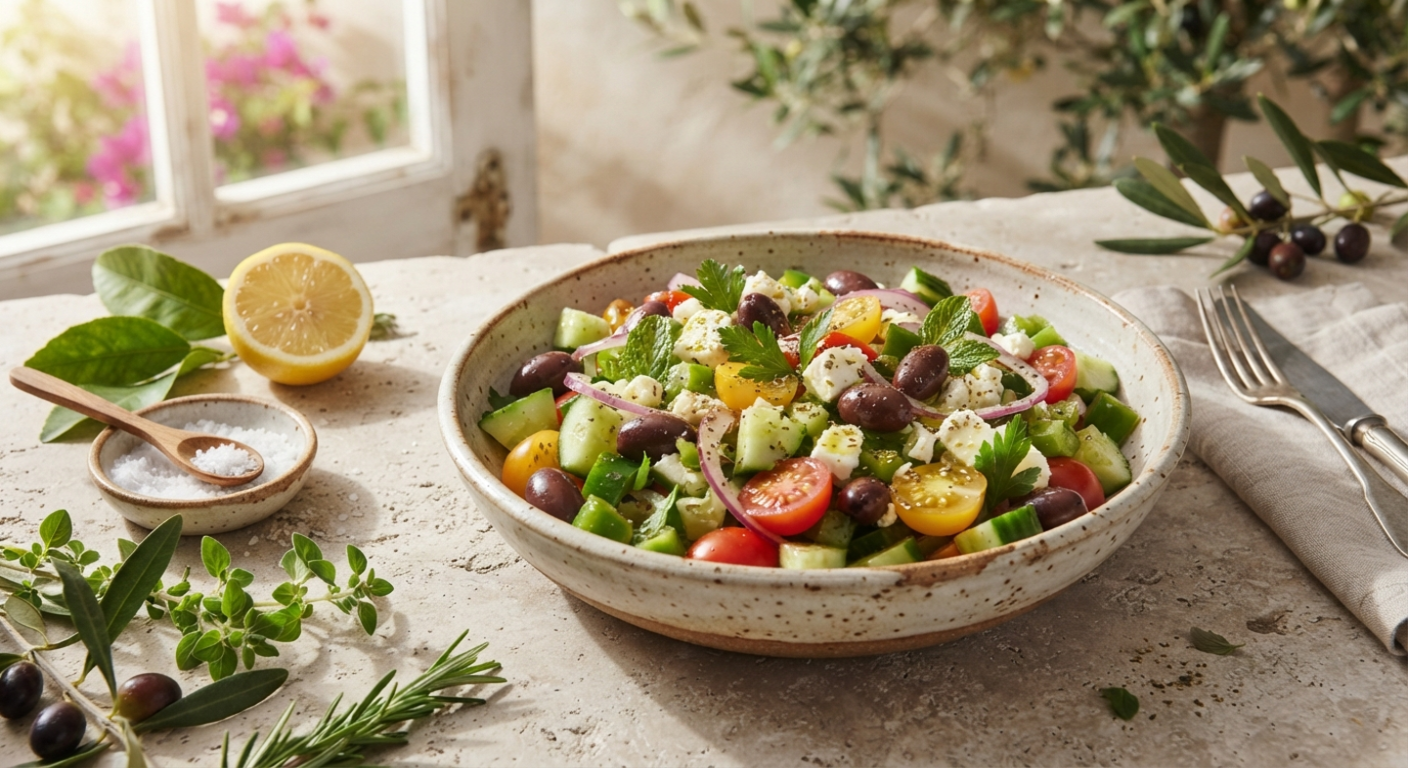
TL;DR: This Mediterranean salad recipe combines crisp cucumbers, juicy tomatoes, briny olives, and creamy feta in a simple lemon-olive oil dressing. It takes just 15 minutes to prep, works as a light lunch, side dish, or meal prep staple, and tastes fresher than anything from a restaurant.
What Is Mediterranean Salad?
A Mediterranean salad is a fresh vegetable salad made with cucumbers, tomatoes, red onion, olives, and feta cheese, tossed in a lemon and olive oil dressing.
It’s inspired by the everyday cooking of countries along the Mediterranean coast, like Greece, Turkey, Lebanon, and Italy.
What makes it different from a regular garden salad is the flavor base.
Instead of ranch or creamy dressings, this salad relies on olive oil, lemon juice, and herbs like oregano and mint.
It’s naturally light, colorful, and built around whatever vegetables are freshest that day.
This isn’t a fussy restaurant dish either.
It’s the kind of salad Mediterranean families throw together in ten minutes on a weeknight.
Related read: if you want the traditional version of this style, check out our Greek Salad Recipe, which is a close cousin of this dish.
Why You’ll Love This Mediterranean Salad
You’ll love this salad because it’s fast, fresh, and flexible enough to fit almost any meal.
Here’s exactly why it works so well:
- Fresh – Every bite is crunchy vegetables and bright citrus, nothing heavy or greasy.
- Healthy – It’s packed with fiber, healthy fats, and vitamins, and fits easily into a Mediterranean diet salad plan.
- Quick – You can have this on the table in 15 minutes flat.
- Meal prep friendly – The vegetables hold up well in the fridge for days.
- Customizable – Add protein, swap veggies, or make it creamy. It bends to whatever you need.
- Perfect for summer – No oven, no stove, just a cutting board and a bowl.
Chef Note: I make a big batch of this on Sundays and eat off it all week. It’s my go-to easy Mediterranean salad recipe when I don’t feel like cooking.
Mediterranean Salad Ingredients
The core ingredients in a Mediterranean salad are cucumber, tomato, red onion, bell pepper, Kalamata olives, feta cheese, fresh herbs, and a lemon-olive oil dressing.
Here’s the full ingredient table with quantities for a standard batch that serves 4 as a side or 2 as a main.
| Ingredient | Amount | Why It’s Used |
|---|---|---|
| English cucumber | 1 large | Crunch and hydration |
| Ripe tomatoes | 3 medium (or 2 cups cherry tomatoes) | Juicy sweetness |
| Red onion | 1/2 small | Sharp bite |
| Bell pepper | 1 medium | Extra crunch and color |
| Kalamata olives | 1/2 cup, pitted | Salty, briny depth |
| Feta cheese | 1/2 cup, cubed or crumbled | Creamy, tangy contrast |
| Fresh parsley | 1/4 cup, chopped | Herbal freshness |
| Fresh mint | 2 tbsp, chopped | Cool, bright note |
| Extra virgin olive oil | 4 tbsp | Base of the dressing |
| Lemon | 1, juiced | Acidity and brightness |
| Dried oregano | 1 tsp | Classic Mediterranean flavor |
| Salt | to taste | Balances everything |
| Black pepper | to taste | Gentle heat |
Every one of these ingredients has a job to do in this salad, and skipping one changes the whole balance.
That’s exactly why the next section breaks each one down individually.

Ingredient Notes
Each ingredient in this Mediterranean salad plays a specific role in flavor, texture, or freshness, and knowing that helps you make smart substitutions.
Feta Cheese
Flavor: Salty and tangy, slightly sharp.
Texture: Crumbly but creamy, not rubbery.
Substitutes: Goat cheese, dairy-free feta, or a plant-based crumble for a vegan Mediterranean salad.
Buying tip: Buy a block of feta in brine, not pre-crumbled feta, since block feta stays fresher and tastes creamier.
Freshness tip: Store leftover feta in its brine liquid in the fridge, and it will last for weeks.
Cucumber
Flavor: Mild, slightly sweet, refreshing.
Texture: Crisp and watery.
Substitutes: English cucumber works best because it has fewer seeds, but Persian cucumbers are a great backup.
Buying tip: Choose cucumbers that feel firm from end to end, with no soft spots.
Freshness tip: If your cucumber feels a little soft, peel it. The skin softens first.
Tomatoes
Flavor: Sweet and slightly acidic.
Texture: Juicy and soft.
Substitutes: Cherry or grape tomatoes work beautifully, especially when regular tomatoes aren’t in season.
Buying tip: Smell the stem end. A sweet, earthy smell means a ripe, flavorful tomato.
Freshness tip: Never refrigerate tomatoes. Cold temperatures kill their flavor and turn them mealy.
Red Onion
Flavor: Sharp and peppery, with mild sweetness.
Texture: Crisp and thin.
Substitutes: Shallots or thinly sliced green onions if red onion is too strong for you.
Buying tip: Pick onions that feel heavy and firm for their size.
Freshness tip: Soak sliced red onion in cold water for 10 minutes to mellow the bite without losing crunch.
Bell Pepper
Flavor: Sweet and slightly grassy.
Texture: Crisp and juicy.
Substitutes: Any color works, but red or yellow peppers taste sweeter than green.
Buying tip: Look for peppers that feel heavy and have tight, shiny skin.
Freshness tip: Store peppers in the crisper drawer, unwashed, until you’re ready to use them.
Kalamata Olives
Flavor: Salty, fruity, slightly bitter.
Texture: Meaty and firm.
Substitutes: Green olives or a mix of both if you want extra variety.
Buying tip: Buy pitted olives packed in brine, not oil, for the freshest bite.
Freshness tip: Rinse olives briefly if you find the brine too salty for your taste.
Parsley
Flavor: Grassy and slightly peppery.
Texture: Light and leafy.
Substitutes: Cilantro works if you enjoy its flavor, though it’s not traditional.
Buying tip: Choose flat-leaf (Italian) parsley over curly parsley for better flavor.
Freshness tip: Store parsley stems-down in a glass of water in the fridge, like flowers.
Mint
Mint adds a cool, bright note that makes this salad taste incredibly fresh.
Flavor: Cool and slightly sweet.
Texture: Delicate and soft.
Substitutes: Basil if you want an Italian twist instead.
Buying tip: Look for mint with no wilted or blackened leaves.
Freshness tip: Add mint last, right before serving, since it wilts and darkens quickly once cut.
Oregano
Flavor: Earthy, slightly peppery, aromatic.
Texture: N/A, used dried.
Substitutes: Za’atar for a Middle Eastern twist.
Buying tip: Buy Greek or Mediterranean dried oregano if you can find it, since it’s more fragrant than standard grocery brands.
Freshness tip: Crush dried oregano between your fingers before adding it, which wakes up the oils and flavor.
Salt and Pepper
Flavor: Salt enhances sweetness and cuts bitterness. Pepper adds gentle heat.
Texture: N/A.
Substitutes: Sea salt or kosher salt work best for even seasoning.
Buying tip: Use flaky sea salt for finishing if you want a restaurant-style presentation.
Freshness tip: Freshly cracked black pepper tastes noticeably stronger than pre-ground.

How to Make Mediterranean Salad
This Mediterranean salad comes together in five simple steps: chop the vegetables, make the dressing, combine everything, toss gently, and serve.
Here’s exactly how to do each step right.
Step 1: Chop the Vegetables Evenly
Dice the cucumber, tomatoes, bell pepper, and red onion into similar bite-sized pieces.
Why: Even pieces mean every bite has a balanced mix of flavors and textures.
Common mistake: Cutting pieces too small turns the salad watery and mushy.
Pro tip: Aim for pieces about the size of your fingertip, roughly half an inch.
Step 2: Prep the Tomatoes Separately
If using regular tomatoes, scoop out the watery seed pockets before dicing.
Why: This keeps your salad from getting soggy later.
Common mistake: Leaving in the seeds and juice, which waters down the dressing.
Pro tip: Save those tomato juices for soup or sauce instead of tossing them.
Step 3: Make the Dressing
Whisk the olive oil, lemon juice, oregano, salt, and pepper together in a small bowl or jar.
Why: Making it separately lets you taste and adjust before it touches the vegetables.
Common mistake: Pouring oil and lemon straight onto the salad without mixing first, which leads to uneven flavor.
Pro tip: Shake the dressing in a sealed jar for a quicker, more even emulsion.
Step 4: Combine Everything
Add the cucumber, tomatoes, onion, pepper, olives, and herbs to a large bowl.
Why: A wide, shallow bowl makes tossing easier without crushing the vegetables.
Common mistake: Using a bowl that’s too small, which bruises the softer vegetables.
Pro tip: Chill the bowl in the fridge for 10 minutes beforehand for an extra-crisp salad.
Step 5: Dress and Toss Gently
Pour the dressing over the salad, add the feta last, and toss gently with your hands or salad servers.
Why: Tossing gently keeps the feta from crumbling into mush.
Common mistake: Overmixing, which breaks down the cheese and vegetables.
Pro tip: Add feta after tossing the dressing in, then fold it in with just two or three light turns.

Mediterranean Salad Dressing
The Mediterranean salad dressing is a simple mix of extra virgin olive oil, fresh lemon juice, dried oregano, salt, and pepper.
It works because it follows a classic 3:1 ratio, three parts olive oil to one part lemon juice, which is the same balance used in most Mediterranean vinaigrettes.
Basic Ratio:
- 3 parts extra virgin olive oil
- 1 part fresh lemon juice
- Pinch of oregano, salt, and pepper
This homemade Mediterranean dressing tastes brighter and fresher than anything from a bottle, and it takes about 90 seconds to make.
Ways to customize it:
- Add a small clove of minced garlic for extra punch.
- Swap lemon juice for red wine vinegar for a sharper taste.
- Add a teaspoon of Dijon mustard to help the dressing emulsify and cling better.
- Stir in a spoonful of the feta brine for a salty, tangy twist.
Pro Tip: Always taste your dressing on its own before adding it to the salad. It should taste slightly too strong on its own, because the vegetables will mellow it out.

Expert Tips
Getting restaurant-quality flavor from this salad comes down to a handful of small techniques most recipes skip.
Here are the tips that make the biggest difference.
- Keep vegetables crisp: Chop your vegetables and store them separately from the dressing until right before serving.
- When to add dressing: Only dress the portion you plan to eat that day. Dressed salad gets soggy within a few hours.
- Best olive oil: Use a fruity, robust extra virgin olive oil. Cheap “light” olive oil has almost no flavor.
- Best feta: Block feta in brine has a creamier texture and stronger flavor than pre-crumbled feta.
- Prevent watery salad: Salt cucumbers lightly and let them sit for 5 minutes on a paper towel to draw out extra water before mixing.
- Restaurant-quality flavor: Finish with a pinch of flaky salt right before serving. It adds texture and a flavor boost.
- Knife skills: Use a sharp knife, not a dull one. Dull knives crush vegetables instead of cutting them cleanly.
- Balancing acidity: If your dressing tastes too sharp, add a tiny pinch of sugar or honey to round it out.
Warning Box: Don’t skip drying your vegetables after washing. Wet vegetables dilute the dressing and make the salad taste flat.
Time-Saving Tip: Buy pre-pitted olives and block feta already cut into cubes. It shaves a few minutes off prep without hurting the flavor.
Healthy Swap: If you’re watching sodium, use half the amount of olives and add extra cucumber and bell pepper to keep the crunch without the extra salt.

Common Mistakes
The most common mistake is dressing the salad too early, which leaves you with a watery, wilted bowl instead of a crisp one.
Here are the other mistakes to avoid, and how to fix them.
| Mistake | Why It’s a Problem | How to Fix It |
|---|---|---|
| Dressing too early | Vegetables release water and go soggy | Dress right before serving |
| Cutting vegetables too small | Turns mushy and loses texture | Cut into half-inch pieces |
| Skipping tomato seeds | Adds excess liquid | Scoop out seeds before dicing |
| Using bottled lemon juice | Tastes flat and bitter | Always use fresh lemons |
| Overmixing | Crumbles the feta into dust | Toss gently, just a few turns |
| Using pre-crumbled feta | Dry texture, less flavor | Buy block feta in brine |
| Not tasting as you go | Dressing can be unbalanced | Taste and adjust salt and acid |
Variations
This Mediterranean salad recipe is a base you can rebuild in dozens of directions depending on what you’re craving.
Below are the most popular variations readers ask us about.
- Classic Mediterranean Salad The original recipe above, no additions needed.
- Mediterranean Chickpea Salad Add a can of drained, rinsed chickpeas for extra fiber and protein.
- Mediterranean Chicken Salad Top with grilled, sliced chicken breast for a full meal.
- Mediterranean Pasta Salad Toss in 2 cups of cooked, cooled pasta and extra dressing.
- Mediterranean Quinoa Salad Mix in a cup of cooked quinoa for a heartier, grain-based bowl.
- Mediterranean Bean Salad Add white beans or a bean mix for a plant-based protein boost.
- Creamy Mediterranean Salad Stir 2 tablespoons of Greek yogurt into the dressing for a creamy version.
- Everyday Mediterranean Salad A simplified version with just cucumber, tomato, onion, and feta for busy weeknights.
- Mediterranean Salad Bowl Build it over a bed of greens or rice with extra toppings for a full bowl meal.
- Vegan Mediterranean Salad Skip the feta or use a plant-based feta alternative.
Best Proteins to Add
The best proteins for a Mediterranean salad are grilled chicken, shrimp, salmon, and chickpeas, since they all pair naturally with the lemon-olive oil dressing.
| Protein | Prep Style | Best For |
|---|---|---|
| Chicken | Grilled or pan-seared, sliced | Everyday lunch or dinner |
| Shrimp | Sautéed with garlic and lemon | Quick weeknight meals |
| Salmon | Baked or grilled, flaked | Omega-3 boost |
| Tofu | Pan-fried until crispy | Vegan protein option |
| Chickpeas | Rinsed, drained, or roasted | Fiber-rich, no-cook option |
| White beans | Rinsed and drained | Creamy texture, plant-based |
| Steak | Grilled, thinly sliced | Heartier dinner option |
Meal Prep Tip: Cook a big batch of grilled chicken on Sunday, and you’ll have protein ready for this salad all week long.

What to Serve with Mediterranean Salad
Mediterranean salad pairs best with grilled proteins, warm pita bread, soups, and other light Mediterranean sides.
Main dishes:
- Grilled chicken skewers
- Baked salmon
- Lamb kofta
Soups:
- Lentil soup
- Tomato basil soup
Bread:
- Warm pita
- Toasted flatbread with hummus
Grilled foods:
- Grilled halloumi
- Grilled corn
Picnic ideas:
- Pack the salad and dressing separately in containers for a fresh picnic lunch.
Meal prep ideas:
- Pair with a scoop of hummus and pita chips for an easy, balanced lunch box.
Curious how this salad fits into your daily calorie goals? Try our free

to check the numbers for your exact portion.
Storage Instructions
Undressed Mediterranean salad stays fresh in the fridge for up to 4 days, while dressed salad is best eaten within 24 hours.
Fridge: Store vegetables and dressing in separate airtight containers.
Meal prep: Prep all ingredients on Sunday, then mix individual portions fresh each day.
Leftovers: If already dressed, drain excess liquid before eating and taste-test for freshness.
Can you freeze it? No, freezing turns the vegetables mushy and watery once thawed.
Storage Tip: Keep feta separate from the vegetables if meal prepping, and add it just before eating for the best texture.
Meal prep in jars: If you like grab-and-go lunches, layer the dressing on the bottom of a mason jar, then the sturdier vegetables like cucumber and pepper, then the softer tomatoes, and finish with feta and herbs on top.
Shake it right before eating and everything mixes together without going soggy in the fridge overnight.
This trick alone is what turned this salad into my everyday lunch, not just a weekend side dish.

Nutrition
A standard 1.5-cup serving of this Mediterranean salad has roughly 180-220 calories, depending on how much feta and olive oil you use.
| Nutrient | Approximate Amount (per serving) |
|---|---|
| Calories | 180-220 |
| Protein | 5-6 g |
| Fiber | 3-4 g |
| Healthy fats | 14-16 g |
| Carbohydrates | 8-10 g |
These numbers will shift based on your exact portions, so use our
if you want an exact count for your bowl.
This salad fits naturally into a Mediterranean diet salad plan because it’s rich in healthy fats from olive oil, fiber from vegetables, and moderate protein from feta.
Frequently Asked Questions
Can I make Mediterranean salad ahead of time? Yes, but keep the dressing separate and add it right before serving to keep the vegetables crisp.
Why does my Mediterranean salad get watery? Watery salad usually comes from tomato seeds, undried vegetables, or dressing the salad too early.
What’s the difference between Mediterranean salad and Greek salad? Greek salad is a specific version of Mediterranean salad that traditionally skips lettuce and always includes feta, olives, and oregano.
Can I use bottled lemon juice instead of fresh? You can, but fresh lemon juice tastes noticeably brighter and less bitter than bottled.
Is Mediterranean salad the same as a chopped salad? Not exactly. A chopped salad refers to the cutting style, while Mediterranean salad refers to the specific flavor profile and ingredients.
Can I add lettuce to Mediterranean salad? Yes, romaine or mixed greens work well as a base if you want to turn it into a bigger Mediterranean salad bowl.
Why is my dressing too bitter? Bitter dressing usually means too much lemon juice or a very peppery olive oil. Balance it with a small pinch of sugar or honey.
Can I use regular yellow onion instead of red? You can, but red onion has a milder, slightly sweeter bite that works better raw.
Is this recipe gluten-free? Yes, the classic version is naturally gluten-free as long as you don’t add pasta or bread.
How do I make this salad more filling? Add a protein like grilled chicken or chickpeas, or serve it over a bed of quinoa or rice.
Can kids eat Mediterranean salad? Yes, though you may want to reduce the raw onion and olives if your kids are sensitive to strong flavors.
Why does restaurant Mediterranean salad taste better than mine? It usually comes down to fresher herbs, better quality olive oil, and dressing the salad right before it’s served.
Can I use dried herbs instead of fresh parsley and mint? You can, but use about a third of the amount since dried herbs are much stronger and can overpower the salad.
What’s the best container for meal prepping this salad? Use a wide, shallow container instead of a deep one, since it keeps the vegetables from getting crushed under their own weight.
Does this salad taste good the next day? Yes, as long as it wasn’t dressed yet. Undressed, it actually tastes even better after the flavors have had time to sit together in the fridge.
Can I make this salad spicy? Yes, a pinch of red pepper flakes or a few thin slices of fresh chili in the dressing adds a nice kick without changing the base flavor.
Conclusion
This Mediterranean salad recipe is proof that the simplest ingredients, treated well, make the best food.
No fancy equipment, no long ingredient list, just fresh vegetables, good olive oil, and a squeeze of lemon.
Once you make it a few times, you’ll start adjusting it to your own taste, and that’s exactly how it should be.
If you try this recipe, I’d love to hear how it turned out in the comments below.
And if you’re craving the traditional version next, don’t miss our Greek Salad Recipe too.